Brisbane 2032
2.9k3 min read
Potential Developments for Infrastructure for the 2032 Brisbane Olympics
By Blackstone and Windsor — 14 July 2026 · 14/07/2026, 12:00 am
Potential Developments for Infrastructure for the 2032 Brisbane Olympics
When Brisbane secured the rights to host the 2032 Olympic and Paralympic Games, it wasn't just a sporting win — it triggered one of the largest infrastructure investment programs in Queensland's history. From world-class stadiums to underground rail lines, roads, and regional venue upgrades, the lead-up to the Games is reshaping Brisbane and South East Queensland well beyond the two weeks of competition in July–August 2032. Here's where things currently stand, and what's still to come.
The Scale of the Investment
The Australian and Queensland governments have committed to a $7.1 billion Games Venue Infrastructure Program, with the Australian Government contributing up to $3.435 billion of that total. This funding sits under an Intergovernmental Agreement covering 17 new and upgraded venues across the state — a deliberate departure from past Olympic hosts that built dozens of new, purpose-built arenas. In keeping with the IOC's "New Norm" reforms, which encourage hosts to rely on existing or temporary venues wherever possible, roughly 84% of the venues in Brisbane's original bid were already existing or planned to be temporary.
In December 2025, the Games Independent Infrastructure and Coordination Authority (GIICA) appointed Unite32 — a joint venture between AECOM and Laing O'Rourke — as delivery partner to oversee the rollout of this infrastructure program.
The Flagship Venue: Victoria Park Stadium
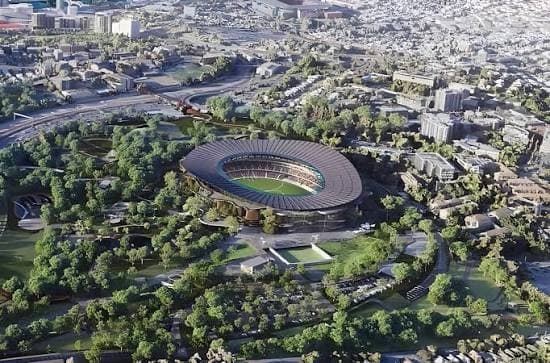
The centrepiece of the entire program is a new 63,000-seat stadium at Victoria Park, confirmed in January 2026 as the primary Olympic venue after a lengthy and at times contentious debate over whether to redevelop the Gabba instead. Located centrally in Brisbane, the stadium is being designed by a joint venture between Cox, Hassell, and Azusa Sekkei — the same Australian firms behind Perth's Optus Stadium and the redeveloped Adelaide Oval.
The venue is intended to host the opening and closing ceremonies as well as athletics events during the Games, before becoming the long-term home of the Brisbane Lions (AFL), Brisbane Heat, and Queensland Bulls (cricket). Early site works are expected to begin following the appointment of a construction contractor, with candidates shortlisted from BesixWatpac, Built, CPB, Samsung C&T, and WeBuild. Construction is anticipated to run from mid-2026 through to completion around 2031, at an estimated cost approaching $3.8 billion.
Aquatic, Indoor Sports, and Regional Venues
Beyond the main stadium, the venue program includes:
- National Aquatic Centre (Spring Hill) — planned to host the majority of aquatic events, with a permanent legacy capacity of 8,000 seats. Procurement for a delivery contractor was underway in early 2026, with early works expected to start before the end of the year.
- Brisbane Aquatic Centre (Chandler) — set to undergo upgrades to support the National Aquatic Centre during the Games.
- Anna Meares Velodrome and BMX Supercross Track (Chandler Sports Precinct) — both already UCI-certified, requiring only minor works, and both scheduled to host major cycling world championships in the lead-up to 2032.
- Brisbane Showgrounds (Bowen Hills) — to be transformed into the main Athletes' Village, housing more than 10,000 athletes and officials during the Olympics and over 5,000 during the Paralympics, with satellite villages also planned for Robina (Gold Coast), Maroochydore, Rockhampton, and Hervey Bay.
- Redland Whitewater Centre — a new facility for whitewater sport co-located with a planned public lagoon and community precinct in Birkdale.
- Barlow Park (Cairns) and Toowoomba Showgrounds, which will be upgraded into an equestrian centre of excellence, extending Games infrastructure — and its legacy benefits — well beyond the South East Queensland corridor.
Transport: The Real Backbone of the Games
Transport is widely regarded as the make-or-break element of any Olympic Games, and Brisbane's plan leans heavily on rail projects already underway before the city won its bid. Chief among them is Cross River Rail, a $6.3 billion, 10.2-kilometre rail line featuring 5.9 kilometres of twin tunnels beneath the Brisbane River and
Comments
Loading comments…
Leave a comment
Comments are reviewed by our team before they appear on this page.

Our numbers
Why work with us
0+
Years within the industry
0H
Typical appraisal turnaround
0%
Reliable and Experienced Agents